

*WE ONLY HOLD ADMISSIONS IN THE FALL FOR ENTRY A YEAR LATER*
THE GRE SCORES WILL BE REQUIRED FOR FALL 2024 ADMISSION TO THE COUNSELING PSYCHOLOGY PROGRAM.
Counseling psychology focuses on the typical adaptation of individuals to their environment and helping them cope with crises, problems of daily living, and mental challenges. Traditionally, counseling psychology has been concerned with both the remedial and preventative aspects of mental health with an emphasis on client strengths. Respect for diversity and for values different from one's own is a central value of Counseling Psychology and more recently there has been a call to actively work toward social justice. Counseling psychologists commonly provide services, teach, and/or engage in research with or pertaining to members of social groups that have often been devalued, viewed as deficient, or otherwise marginalized in the larger society. You can find out more about the counseling psychology specialty area on the Society for Counseling Psychology web page.
The Counseling Psychology Program at UNT endorses the scientist-practitioner model of training and affirms the value of integrating practice and science throughout a psychologist's training and career-long participation in the profession. The program is committed to the idea that human problems are the result of complex interactions of biological influences, environmental factors, and developmental changes in the person. We are also committed to the affirmation of diversity and social justice in the broadest sense, and specifically in psychology as it relates to the alleviation of stress and promotion of mental wellness. We highly value the dignity and worth of individuals inclusive of their gender, race, ethnicity, nationality, sexual orientation, age, physical and mental abilities, political or spiritual beliefs, socioeconomic class, and other identities. As such, we recognize and incorporate these values and principles in the training and practice of counseling psychology.
The Counseling Psychology doctoral program at UNT is fully accredited by the American Psychological Association's Committee on Accreditation [750 First Street NE, Washington, D.C. 20002-4242, telephone (202) 336-5979]. The program was first accredited in 1978 under the directorship of Ray W. Johnson, Ph.D. The current Program Director is Chiachih DC Wang, Ph.D.
The most recent APA reaccreditation process was completed in 2018 by APA Commission on Accreditation, which reaffirmed the full accreditation of the program with the next site visit scheduled to be held in 2028.
Licensure Statement
Graduate training at the UNT Counseling Psychology Program (APA fully accredited) meets the general education requirements for licensure as a licensed psychologist in all 50 states, District of Columbia, and US territories. However, some states (e.g., State of California, Maine, and New York) require additional coursework or registration. It is important to pay attention to the variations in licensure requirements across jusrisdictions. The basic information and requirements for licensure of psychologists in the United States and Candada compiled by the ASPPB (the Association of State and Provincial Psychology Boards) can be found here. Please note that state licensure regulations may change and the program will provide annual update on the information provided by ASPPB. Prospective and current students are encouraged to contact the licensing regulation board/body of particular states for which you would like to pursue your license.
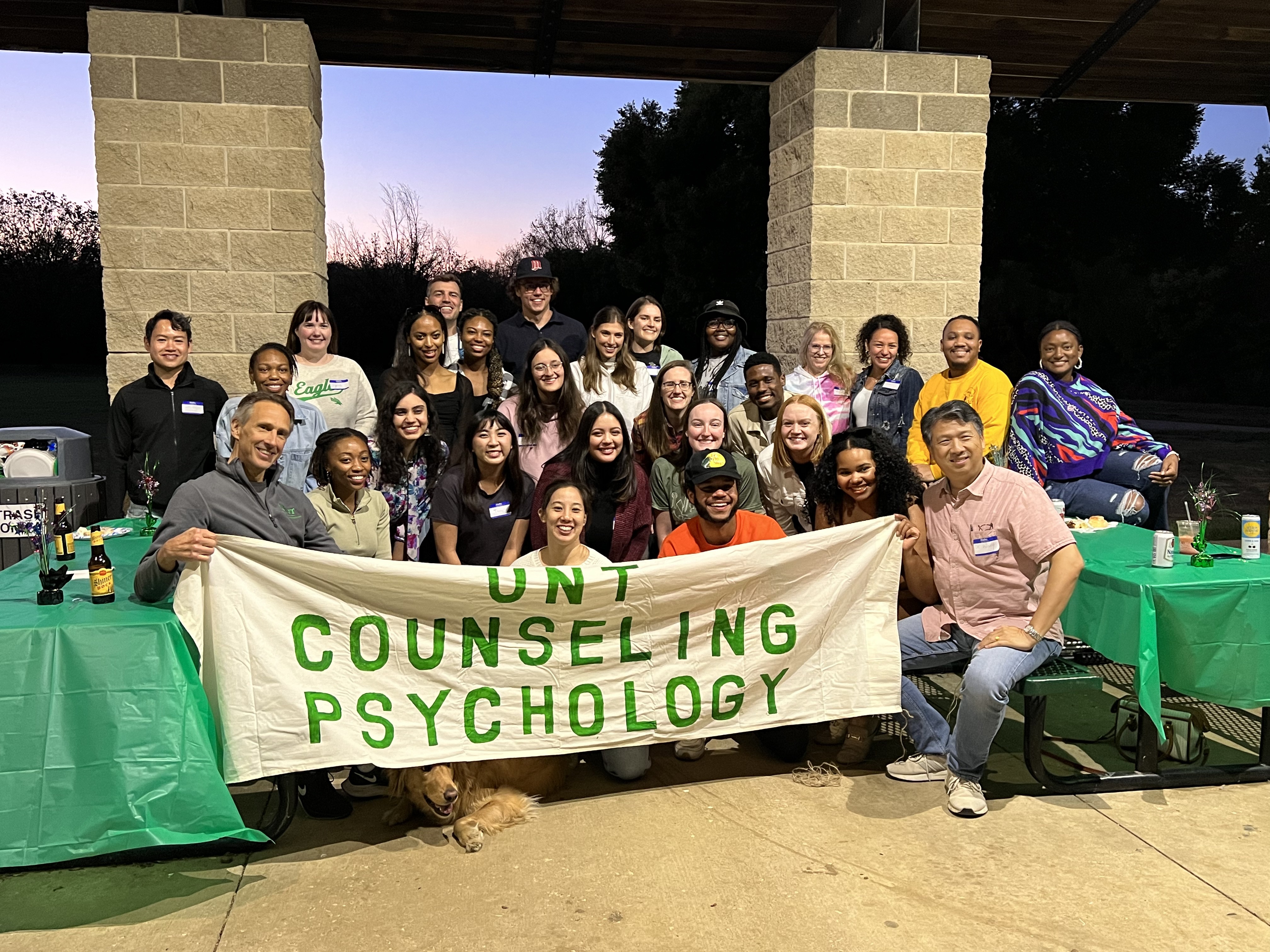
Students & faculty of the program in 2023 Welcome Party
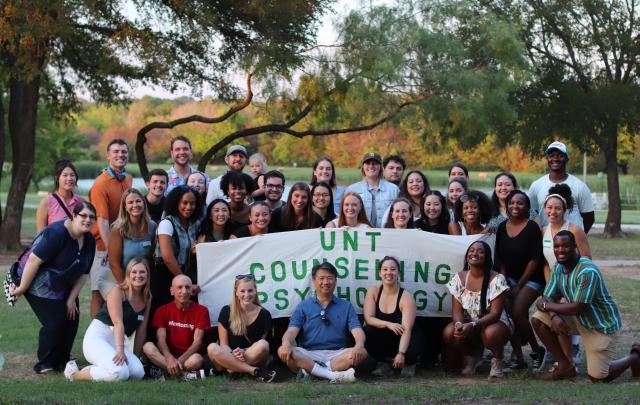
Students & faculty of the program in 2022 Welcome Party
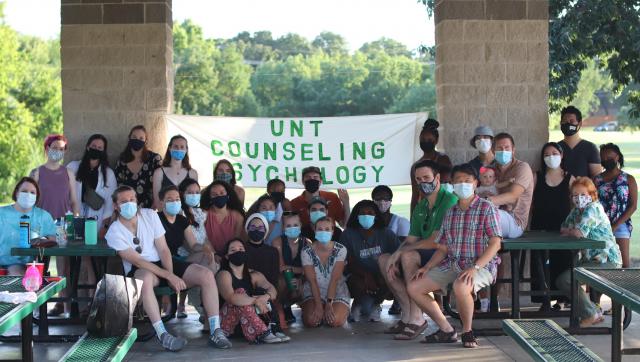
Students & faculty of the Program in 2021 Welcome Party
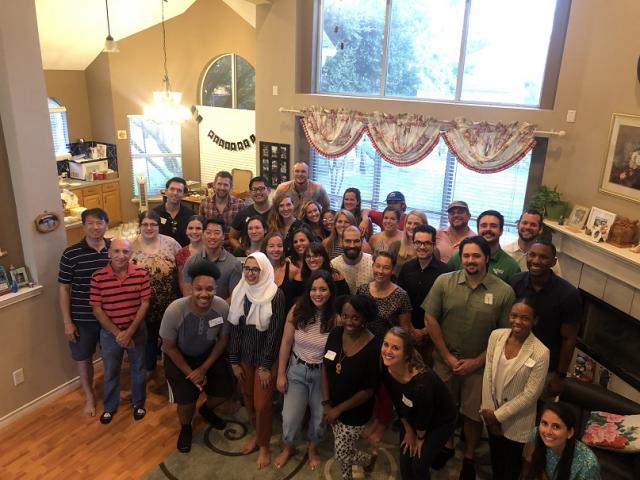
Students & faculty of the Program in 2019 Welcome Party
THECB Marketable Skills
- Psychological research
- Comprehensive psychological assessment
- Mental disorder diagnosis
- Mental health treatment plans
- Psychological interventions